|
||
|
Site-Search: Home {:Sidebar} |
Guggul
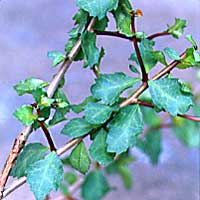
Common name: Gugulipid, Gum guggulu Promotes healthy cholesterol levels and weight loss Guggul is a resin from the mukul myrrh tree that has long been used in India in traditional Ayurvedic medicine to support weight loss, promote flexible joints, and support healthy heart function. The active ingredient in guggul is guggulsterones, which are ketonic steroid compounds. Guggulsterones may help keep LDL cholesterol from oxidizing, thereby promoting healthy arteries. Guggulsterones also may increase thyroid hormone levels and the basal metabolic rate, which promotes fat loss and weight loss. Traditional use: The classical treatise on Ayurvedic medicine, Sushrita Samhita, describes the use of guggul for a wide variety of conditions, including rheumatism and obesity. One of its primary indications was a condition known as medoroga. This ancient diagnosis is similar to the modern description of atherosclerosis. Standardized guggul extracts are approved in India for lowering elevated serum cholesterol and triglyceride levels. Active constituents: Guggul contains resin, volatile oils, and gum. The extract isolates ketonic steroid compounds known as guggulsterones. These compounds have been shown to provide the cholesterol- and triglyceride-lowering actions noted for guggul.1 Guggul significantly lowers serum triglycerides and cholesterol as well as LDL and VLDL cholesterols (the “bad” cholesterols).2 At the same time, it raises levels of HDL cholesterol (the “good” cholesterol). As antioxidants, guggulsterones keep LDL cholesterol from oxidizing, an action which protects against atherosclerosis.3 Guggul has also been shown to reduce the stickiness of platelets—another effect that lowers the risk of coronary artery disease.4 One double-blind trial found guggul extract similar to the drug clofibrate for lowering cholesterol levels.5 Other clinical trials in India (using 1,500 mg of extract per day) have confirmed guggul extracts improve lipid levels in humans.6 A combination of guggul, phosphate salts, hydroxycitrate, and tyrosine coupled with exercise has been shown in a double-blind trial to improve mood with a slight tendency to improve weight loss in overweight adults.7 One small clinical trial found that guggul (Commiphora mukul) compared favorably to tetracycline in the treatment of cystic acne.8 The amount of guggul extract taken in the trial was 500 mg twice per day. Dosage: Daily recommendations for the purified guggul extract are typically based on the amount of guggulsterones in the extract.9 A common intake of guggulsterones is 25 mg three times per day. Most extracts contain 2.5–5% guggulsterones and can be taken daily for 12 to 24 weeks for lowering high cholesterol and/or triglycerides. Side effects or interactions:
Early studies with the crude oleoresin reported numerous side effects,
including diarrhea, anorexia, abdominal pain, and skin rash. Modern
extracts are more purified, and fewer side effects (e.g., mild abdominal
discomfort) have been reported with long-term use. Guggul should be
used with caution by people with liver disease and in cases of inflammatory
bowel disease and diarrhea. A physician should be consulted before
treating elevated cholesterol and triglycerides. "Compared to a "control" group of people who did not have neuropathy, people who had taken statins were 4 to 14 times more likely to develop polyneuropathy that did not have a known cause ... Any side effects of the drugs must be weighed against this "very substantial benefit," ... the study shows that polyneuropathy occurs in 1 out of every 2,200 patients who take statins" "The sap from a tree known in India as guggul contains a compound that blocks the action of a cell receptor, called FXR, that helps regulate the level of cholesterol in the body ... This mechanism is completely different from the action of statin drugs ... finding a new way to reduce cholesterol could be very important for patients who cannot tolerate the side effects that some people experience with statin drugs" "After 24 weeks of gugulipid treatment, total cholesterol levels decreased by 25.2 mg/dl, compared with a 7.6 mg/dl increase in the placebo group (p<0.01). The LDL was 16.9 mg/dl lower and 4.0 mg/dl higher, respectively ... In addition, a significant reduction in triglycerides was seen in the gugulipid-treated arm compared with placebo (-18 vs +5.5 mg/dl" Diabetes: "Guggul (Commiphora mukul) is thought to be the best ayurvedic remedy for managing underlying problems of blood lipids and body fat, says Khalsa. Although it doesn't control blood sugar in the short term, guggul reduces the risk associated with abnormal fat metabolism and many complications of diabetes including atherosclerosis, blindness and nerve degeneration" Guggul Research Research suggests that guggul helps to promote healthy cholesterol levels. A double-blind placebo-controlled study of guggul for reducing cholesterol enrolled 61 individuals and followed them for 24 weeks. After 12 weeks of following a healthy diet, half the participants received placebo and the other half received guggul at a dose providing 100mg of guggulsterones daily. The results after 24 weeks of treatment showed that the treated group experienced an 11.7% decrease in total cholesterol, along with a 12.7% decrease in LDL ("bad") cholesterol, a 12% decrease in triglycerides, and an 11.1% decrease in the total cholesterol HDL ("good") cholesterol ratio. These improvements were significantly greater than what was seen in the placebo group. Contraindications: Patients with liver disease or Irritable Bowel Syndrome should consult a health care professional before using guggul. References: 1. Satyavati GV. Gum guggul (Commiphora
mukul)—The success of an ancient insight leading to a modern
discovery. Indian J Med 1988;87:327–35. Medline-Search: 1: Cui J, Huang L, Zhao A, Lew
JL, Yu J, Sahoo S, Meinke PT, Royo I, Pelaez F, Wright SD. Related
Articles, Books, LinkOut |
|
|
{:Footer} :Issues :Solutions :Biofield :Training :Starfire :Catalog :Order For
all Claims by this Ministry: wizardofeyez are with the Vacancy
of any Claim by any Ministry of this World. For the
Volition of this Ministry is for our Self-Healing of each
Body, Mind and Soul with the Freedom of the Communication
of all Truth by the Authority and Grace of our Sovereign-King
of all Kings of this Kingdom of the Heavens. :SITE-COPYCLAIM-©: 9/8/2001, A.D., with the Freedom against the Egypt-Calendar: G. M. Swartwout© |
||